It’s Back… Flying Bat & Giant Squid visible again!
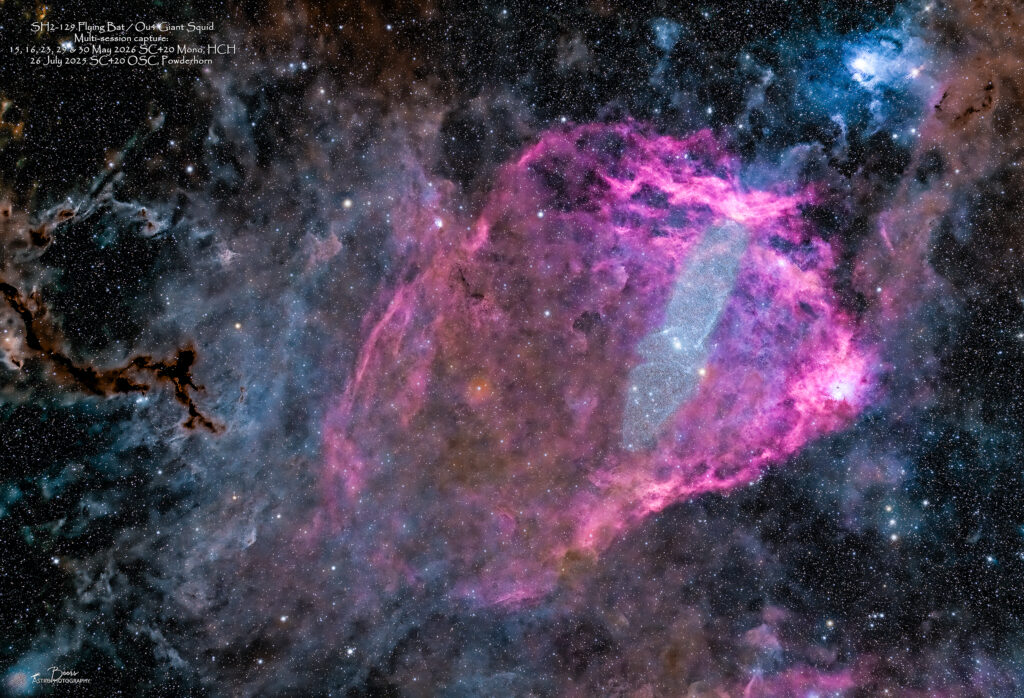
Back from Chile (astrophotography trip, 13-24Mar2026) and back from Australia (work trip, 24Apr-8May2026), the May 2026 New Moon weekend, partially clear at home, allowed me to dust off the mono imaging camera and take the new version of Sequence Generator Pro (SGP v4.5.0.1638 (released 24 Apr 2026)) for a test drive. This started a month’s long visit back to my “OCD” target – SH2-129 Flying Bat / Ou4 Giant Squid. This image, definitely a work in progress (likely all throughout the summer and early fall while it’s visible) is comprised of data collected with the mono camera from the front patio on: 15, 16, 23, 29, and 30 May 2026. The mono data are combined with data captured with the same telescope/reducer and my one-shot color camera in July 2025 at Powderhorn, Colorado.
Sequence Generator Pro CSASTRO presentation
Our Colorado Springs Astronomical Society (CSASTRO) club has a monthly Imaging Group meeting. The organizer and host, Brian Clary, started an image capture series last month with his presentation on N.I.N.A. At the end of that meeting, he asked if anyone could give a similar presentation on Sequence Generator Pro. Since that’s the software that I use, I volunteered to give May’s presentation. The meeting was on Tuesday, 12 May 2026, at Brian’s house in Black Forest and on-line through GoMeeting. Brian shared the link to the GoMeeting recording with us, so I thought I’d share it with you…for any of you who are (really bored) or interested in learning a bit about how the capture process works.
January 2026 mono imaging and equipment “fix”
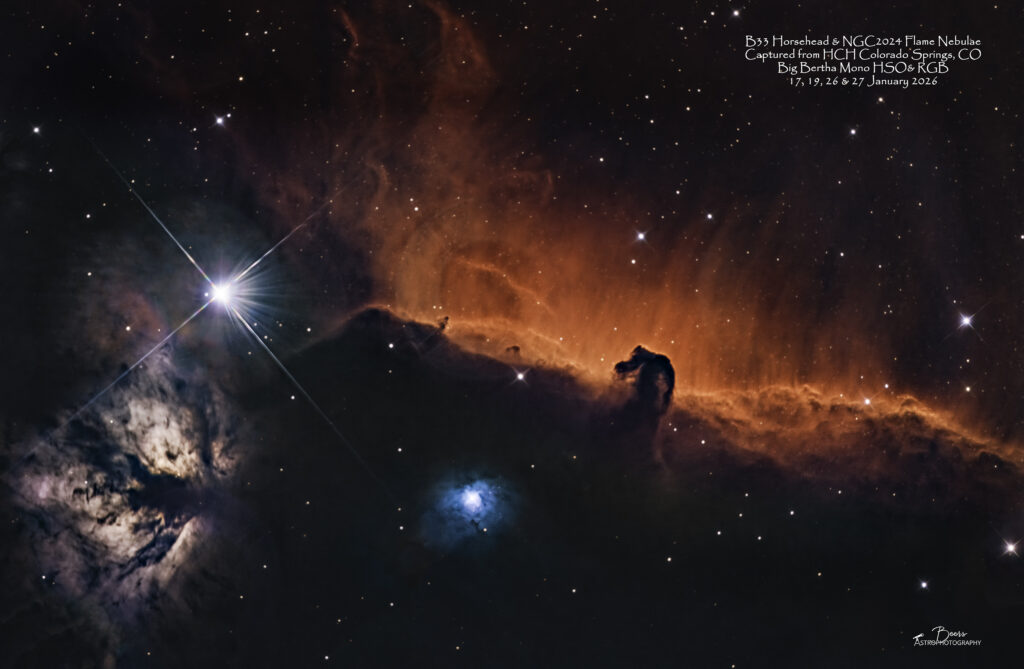
The mono imaging that I started in December 2025 continued into January 2026 – including more processing learning, equipment troubleshooting, and new lessons learned about the limits of mono image capture during a full moon! Through all this, I’ve reinforced my initial impression of the down-side of mono imaging…while I continue to see the potential for processing creativity. I am nowhere near the point of capitalizing upon that positive…but I’ve never shied from a challenge, especially when it comes to this hobby!
My 2025 Astrophotography Year in Review
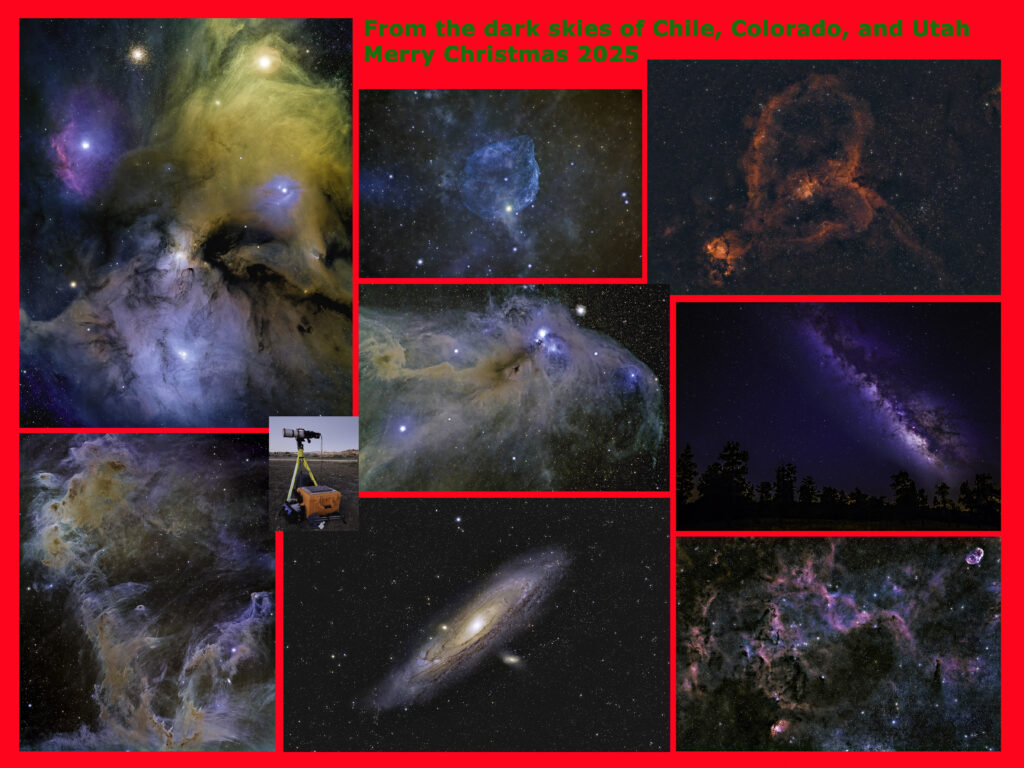
2025 was a year filled with new equipment adventures (ultimately overcome but challenging at the time); dark skies travel – another fabulous trip to the Atacama Desert and an amazing birthday dark skies trip to Utah; three one-night stands in the Beast; and the taking away and giving back of my front patio imaging location.
The rest of the story (and images!) of my 12 Days of Christmas mono imaging extravaganza
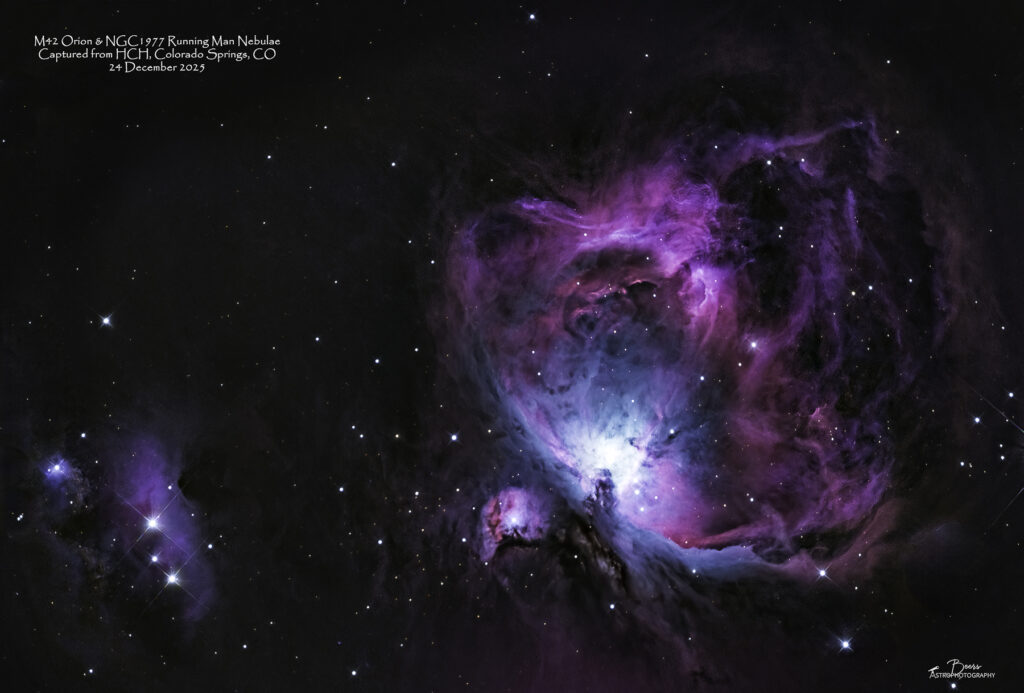
I spent my 12 Nights of Christmas imaging from our front patio with Big Bertha and the latest addition to my astrophotography arsenal – the ZWO ASI6200MM mono camera and 7×2″ filter wheel. There were a lot of equipment, software, and processing hurdles to overcome…but, when it was all said and done, there are images to show for the effort! I’ll let you be the judge (and ask you to share your opinion) of whether you prefer the dark skies color camera images or their mono counterparts.
Dialing in my Mono Data Collection and Processing
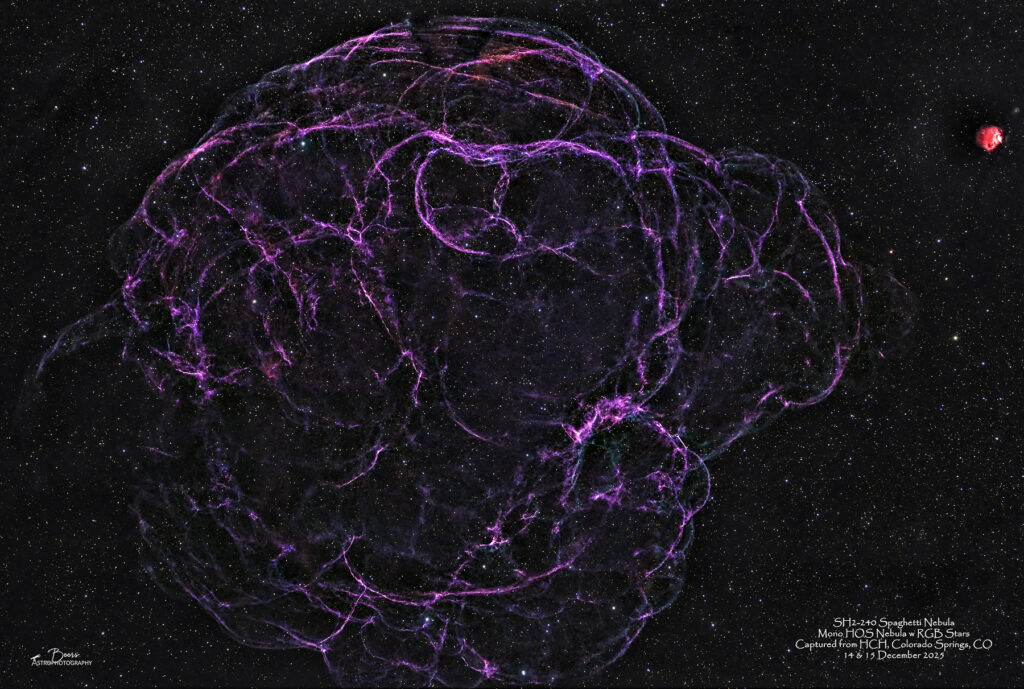
Second light with the ZWO ASI6200MM mono camera and filter wheel came in mid-December giving me the opportunity to work through issues and learn a few key aspects of mono data collection and processing. I still have a LOT to learn and data to process, but for now enjoy the continuing saga of my step into the mono imaging world.
The plunge into mono imaging – second time’s a charm!
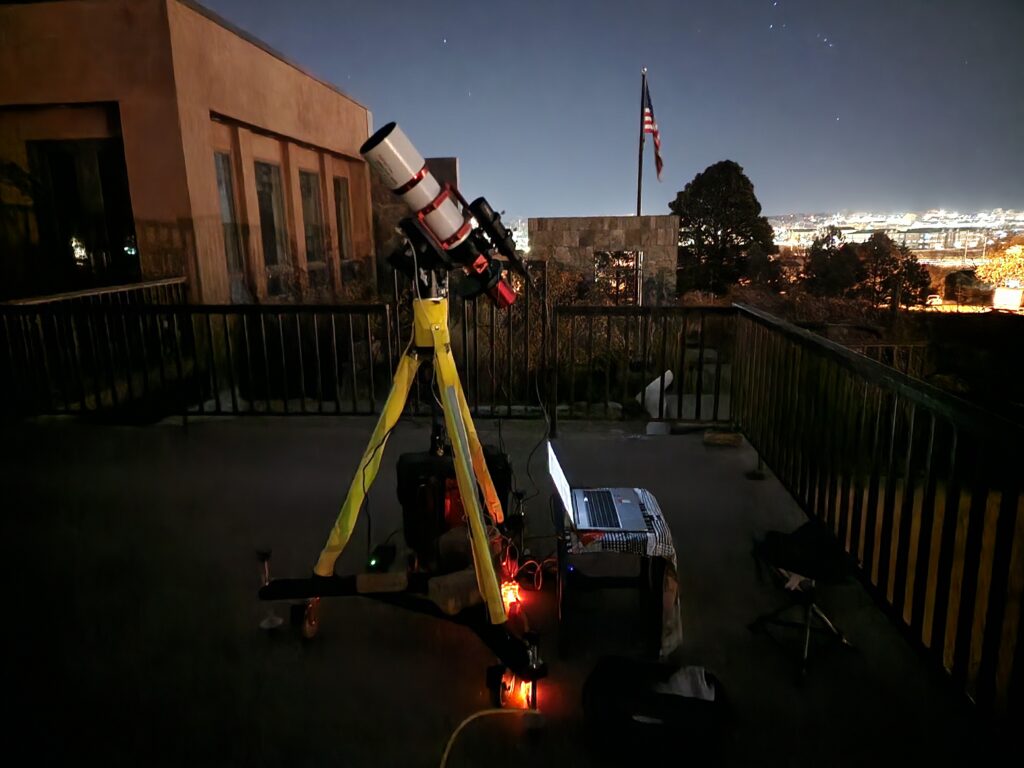
Between my unsuccessful attempts at capturing the faint OIII transmissions of the OU-4 Giant Squid within the SH2-129 Flying Bat Nebula and my curiosity with learning a new technology (imaging with a monochrome camera)…I suggested a birthday present idea to Paul…a QHYCCD MiniCAM8 monochrome camera with a built in filter wheel and the seven astrophotography filters (LRGB and SHO). He jumped right on it, ordering the new camera in mid-August, so it arrived in time to be an anniversary present.
It turned out that while the idea of an integrated camera/filter wheel seemed like a good idea, QHYCCD’s implementation caused it to now turn out so well for me. I could never get the filter wheel driver to function properly and consistently. So, I ended up returning it. Then Paul jumped right on it again, ordering a new ZWO ASI6200 full frame mono camera and a ZWO EFW 7×2″ filter wheel – pushing me head first into the deep end of mono image capture (and processing!)
Second time was a charm (…or was it the push into the deep end? After all, I am a good swimmer!). On 15 November, I had a chance at first light with the ZWO camera and filter wheel from the newly opened HCH front patio – and successfully captured OIII data on OU-4! As an added bonus, I spent the rest of the night after SH2-129/OU-4 set capturing Ha, SII, and OIII data on SH2-240 Spaghetti Nebula. So, not only had I captured mono data with the camera and filter wheel, but I had two disparate data sets to put my (very nascent) mono image processing skills to the test.
Latest tool in the quiver – Baye-Aire remote controller
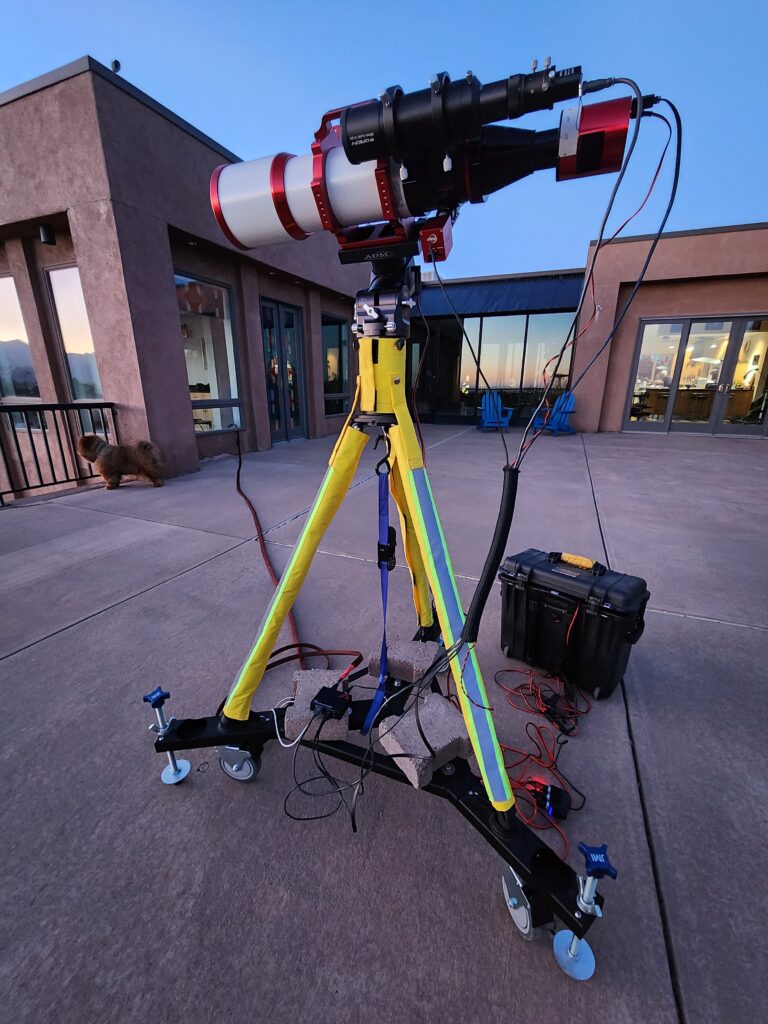
A couple of nights imaging in the cold New Mexico nights over New Years Eve weekend had me wishing for a remote control set-up that would allow me to sit inside the Beast to operate the equipment and check on sequence status throughout the night. Describing that latest “need” for the BeersAP equipment to Paul had him making it happen!
My 2024 Astrophotography Year in Review
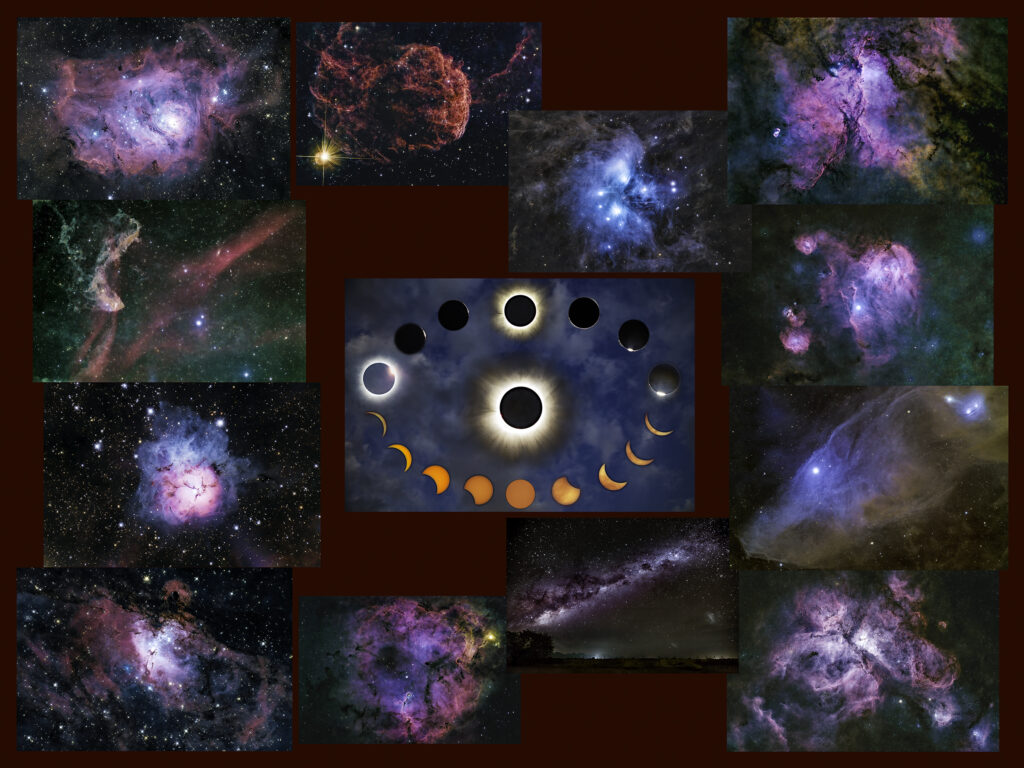
2024 was a good AP year! It included eight nights in dark Colorado or New Mexico skies spread across four Beast trips, six nights of glorious Southern Hemisphere skies at San Pedro de Atacama, Chile’s Atacama Lodge, and a total solar eclipse viewed and imaged from San Saba, Texas. As I was tidying up my 2024 astrophotography journal, creating the Year in Review summary that I always put at the front of that (even more verbose than these blogs (444 pages!)) document, I thought it might make a good blog, so here it is!
New Years Eve dark skies
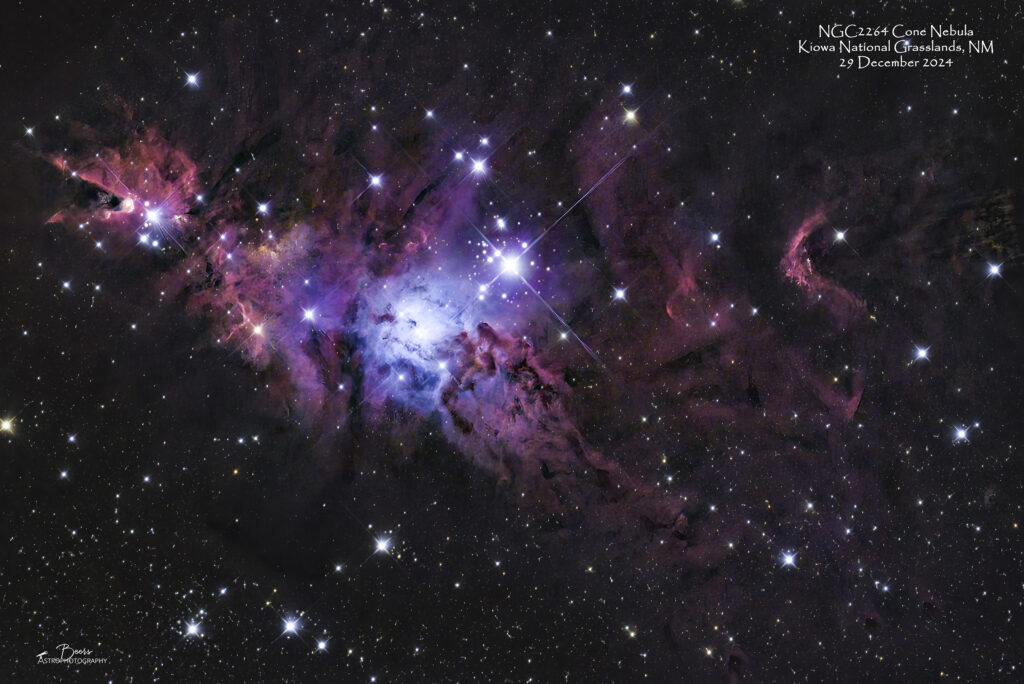
On 2025’s New Years Eve weekend (29-31Dec2024), we were able to get out for a final hoorah of dark skies with a couple of clear, albeit very windy, nights at the Mills Canyon rim in New Mexico’s Kiowa National Grassland. We got to the site, easily situated and leveled the Beast, and made quick work of setting up camp. I set up both Big Bertha and the Southern Cross to take maximum advantage of the waning nebula “season” and our two nights in dark skies.