CSASTRO Presentation on Atacama Desert imaging – 19Aug2025
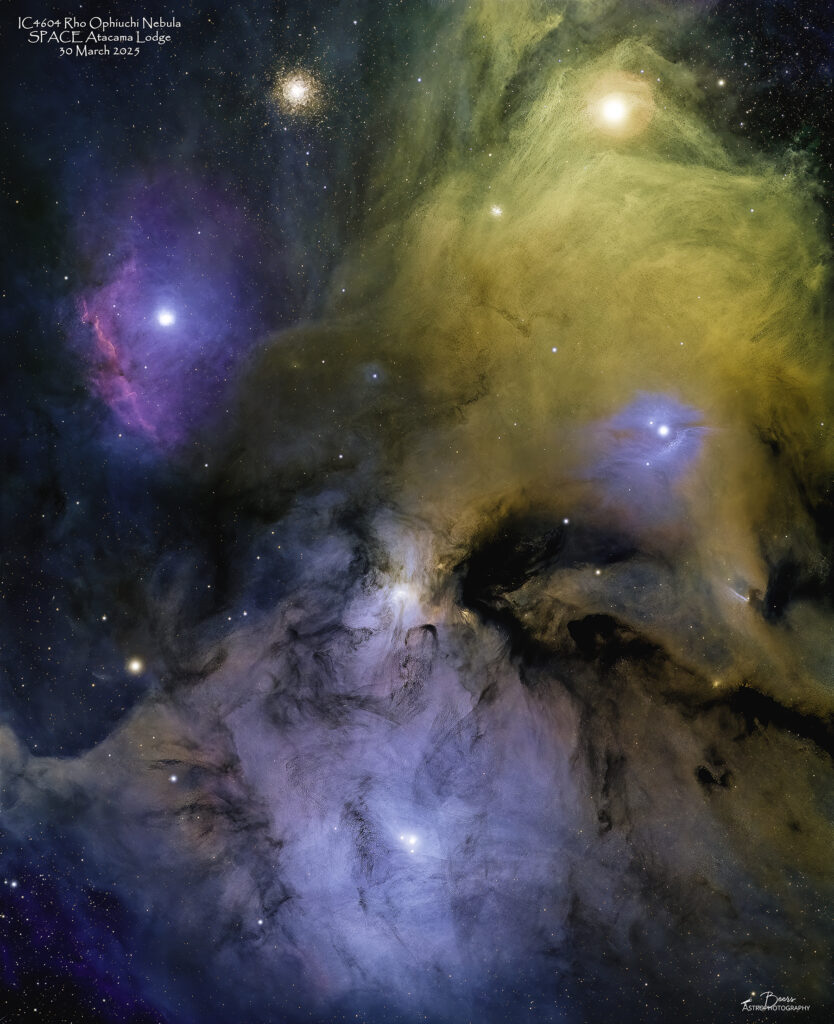
I presented at the Colorado Springs Astronomical League (CSASTRO) Club’s Monthly Meeting, 19 August 2025, on my adventures imaging in the Atacama desert. The meeting invite and a recording of the presentation (with fair warning of what you’re getting yourself into if you watch it!) are below.
One night Beast recon trip to Tolvar Flats
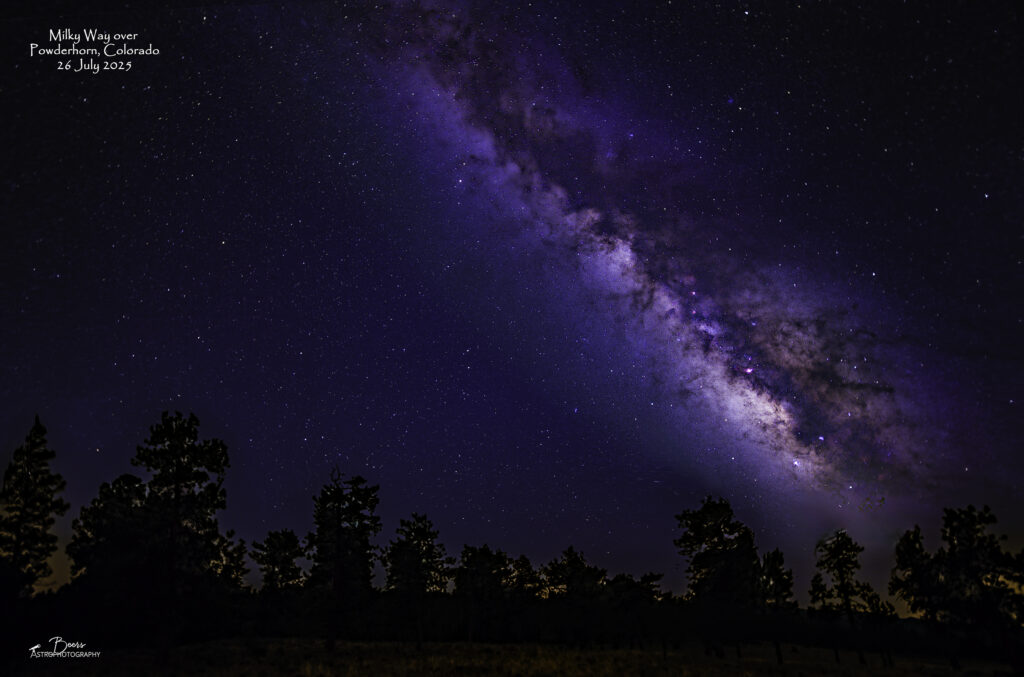
A quick one-night “recon trip” to BLM land near Powderhorn, Colorado afforded us one-night in clear dark skies (our second this year!) to wring out the cobwebs of our camping and Beast-based imaging routines. If you’ve only got one night – you make the most of it – so it was SH2-129 Flying Bat and the Milky Way!! …and this was first light with my newest imaging stream addition – the Askar f/3.9 0.7x Full Frame Reducer for the Askar FRA600
Southern Hemisphere skies are award-winning!!
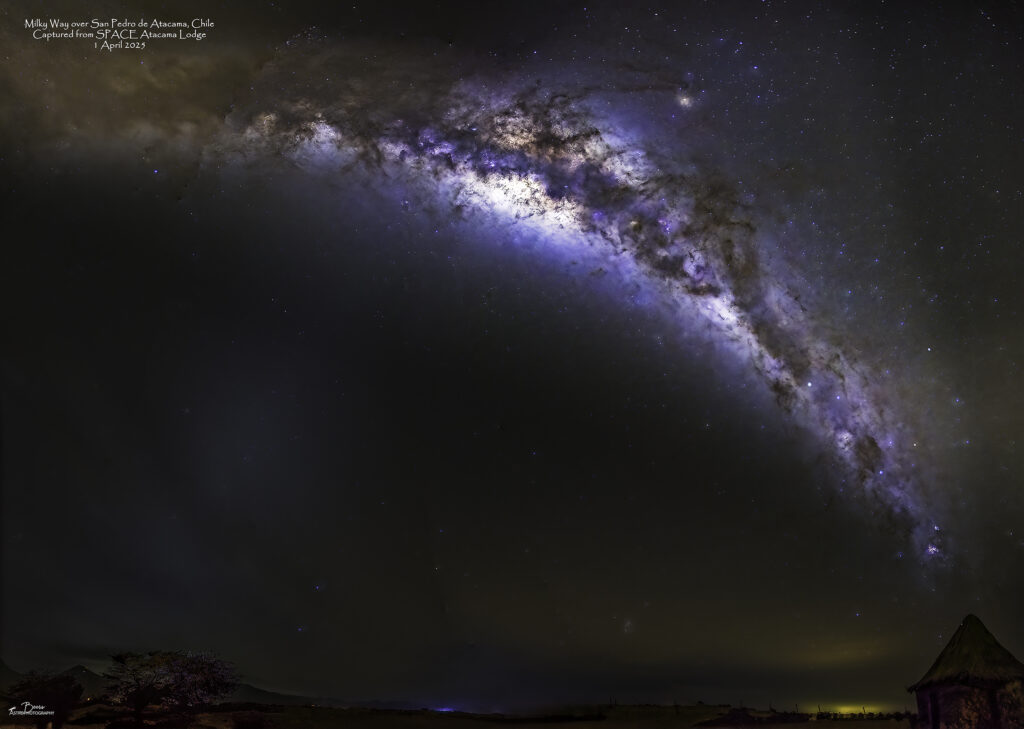
I’ve commented before, dark skies really make a big difference. When I shared the images I captured during my trips to Chile’s Atacama desert, I marveled at their clear, dark, skies (6 of them in a row – during both year’s trips!) I’m very proud to say that my Milky Way image from this year’s trip was recognized by the Astronomical League’s Williamina Fleming Imaging Award and my Fighting Dragons of Ara from last year’s trip (also recognized by the Astronomical League) was selected as Photo of the Month by the Webb Deep Sky Society!
2nd Annual Most Amazing Astrophotography trip to the Atacama Desert!
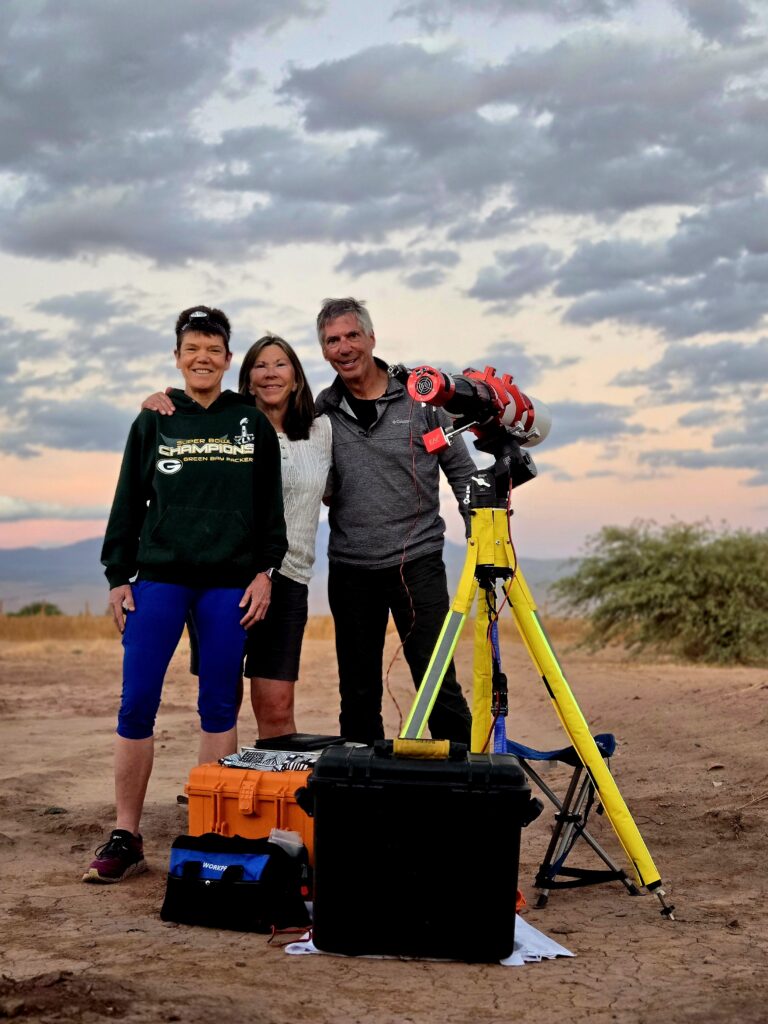
After last year’s most amazing trip to the San Pedro de Atacama Celestial Explorations (SPACE) Atacama Lodge where I spent six nights imaging under their glorious dark and clear skies, I vowed to make the trip an annual event. This year’s traveling companions, Jan Elliott and Dave Parks, shared the adventure with me. The one-line summary is: my travel was completely FUBAR, but once I finally arrived the skies did not disappoint! …and yes, there will be a 3rd Annual!!
Latest tool in the quiver – Baye-Aire remote controller
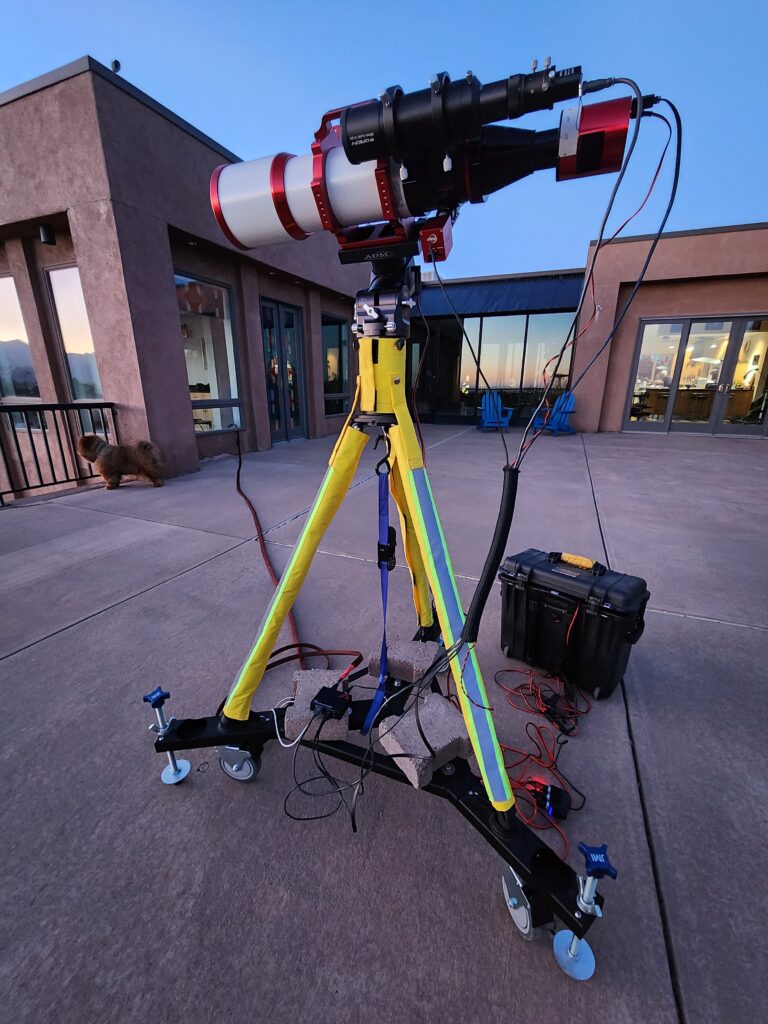
A couple of nights imaging in the cold New Mexico nights over New Years Eve weekend had me wishing for a remote control set-up that would allow me to sit inside the Beast to operate the equipment and check on sequence status throughout the night. Describing that latest “need” for the BeersAP equipment to Paul had him making it happen!
My 2024 Astrophotography Year in Review
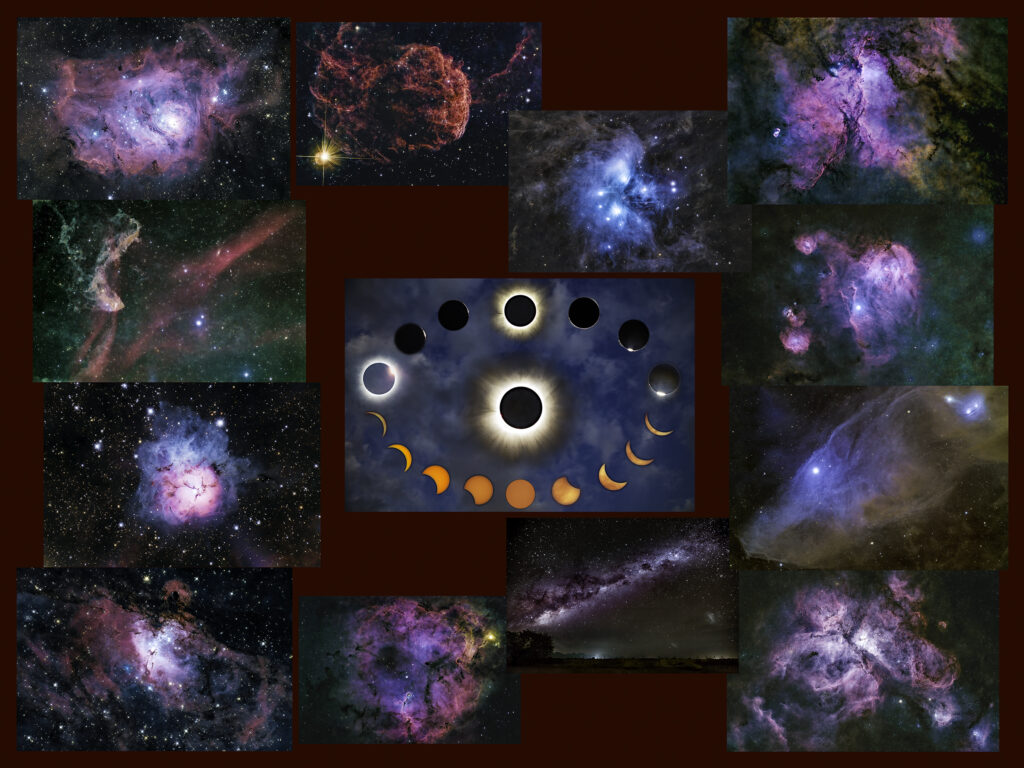
2024 was a good AP year! It included eight nights in dark Colorado or New Mexico skies spread across four Beast trips, six nights of glorious Southern Hemisphere skies at San Pedro de Atacama, Chile’s Atacama Lodge, and a total solar eclipse viewed and imaged from San Saba, Texas. As I was tidying up my 2024 astrophotography journal, creating the Year in Review summary that I always put at the front of that (even more verbose than these blogs (444 pages!)) document, I thought it might make a good blog, so here it is!
New Years Eve dark skies
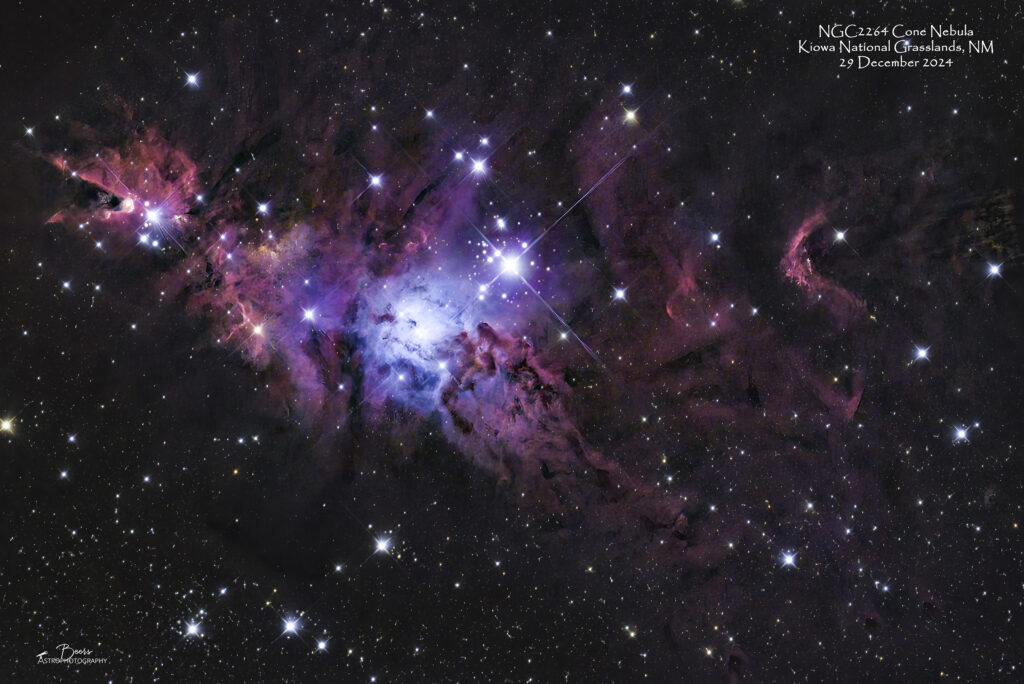
On 2025’s New Years Eve weekend (29-31Dec2024), we were able to get out for a final hoorah of dark skies with a couple of clear, albeit very windy, nights at the Mills Canyon rim in New Mexico’s Kiowa National Grassland. We got to the site, easily situated and leveled the Beast, and made quick work of setting up camp. I set up both Big Bertha and the Southern Cross to take maximum advantage of the waning nebula “season” and our two nights in dark skies.
Thanksgiving Plan-B and December’s month-long laptop struggles
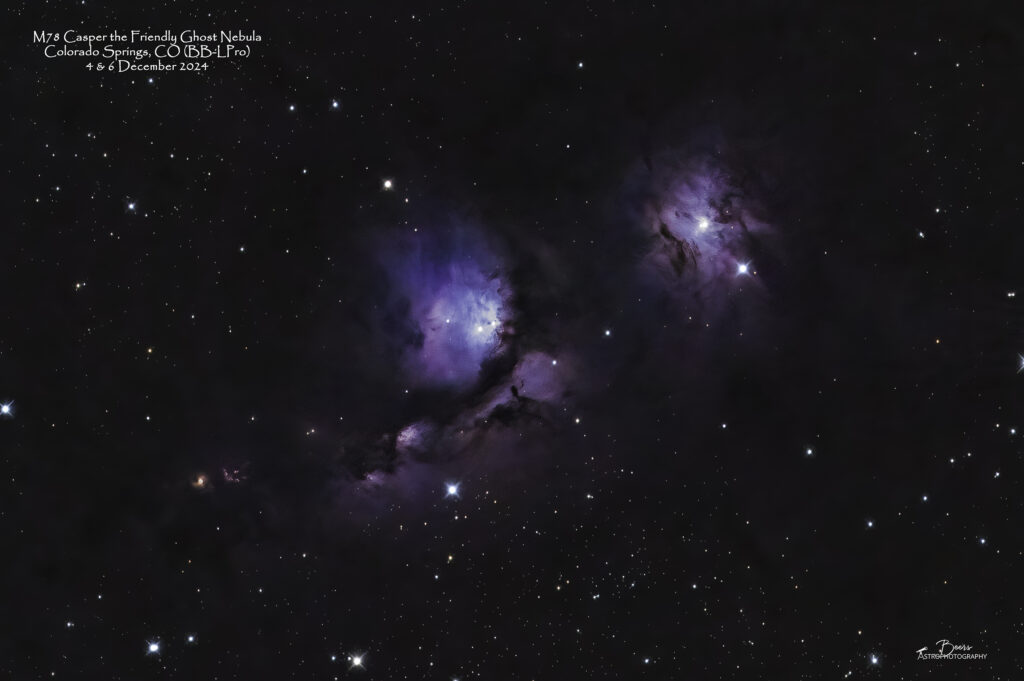
We cancelled our planned Thanksgiving trip to Cincinnati because of Zeus – he had been bitten by a horsefly who, apparently, had deposited a worm into his paw. On Monday afternoon (25Nov2024), before our Tuesday departure, he started limping, by Monday night he could barely walk, and when I got up early on Tuesday morning to take him for a trail walk before leaving for DEN, we discovered the bloody paw – and he would not walk more than a few feet before sitting or laying down. Our amazing vet discovered and removed it – and he was back to his normal self by Wednesday, but by then it was too late to make the trip. After cancelling the Cincinnati trip, we briefly thought about driving to Albuquerque or going on our planned dark skies trip over the long weekend. But we ultimately decided that since it was still a holiday weekend it would be better to just stay home away from the maddening crowds on the roads. So, I decided to set up Big Bertha and capture some data from the front patio, so as not to completely forego the clear nights of and surrounding the New Moon. That move started a month-long struggle with my HP laptop that I use to control Big Bertha…this blog is that story and the images that I was able to capture in spite of it!
Merry Christmas 2024 & Happy New Year 2025
Merry Christmas 2024 & Happy New Year 2025!! We hope that you had a fabulous year and are prepping for an even more spectacular 2025! Our year went by way too fast – filled with flying, astrophotography, beekeeping, a prolific grape harvest, and fun friend times.
A placeholder – the bad and ugly Dolphin Head Nebula, good to follow (hopefully)
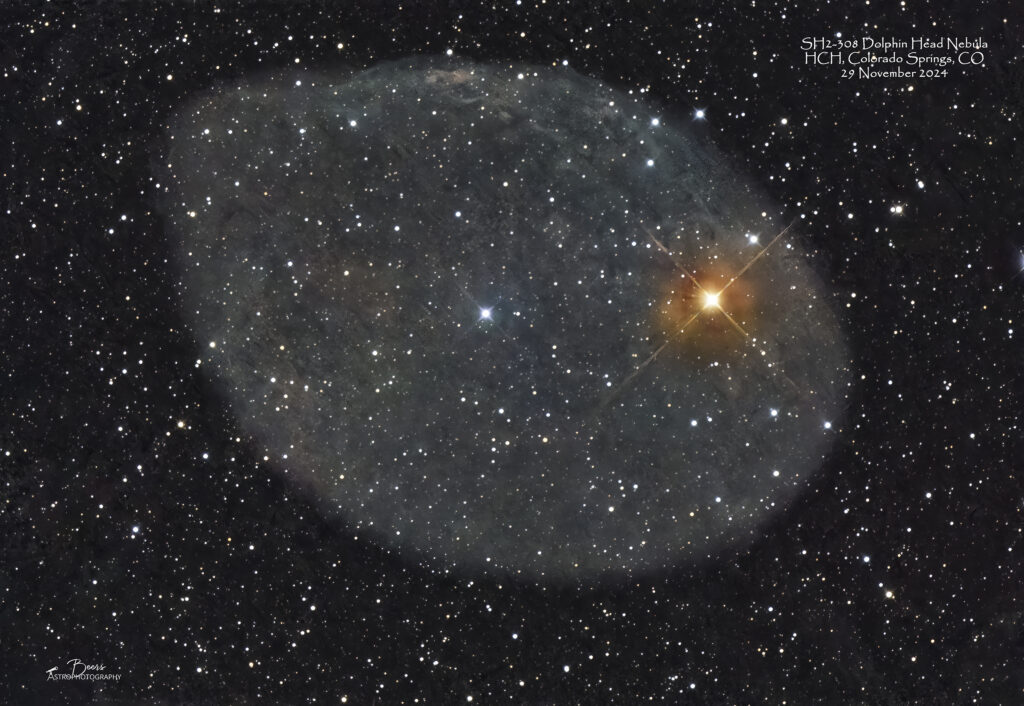
WARNING: The image you see below is a COMPLETE PLACEHOLDER! As the title implies – this is the bad and ugly version of the Dolphin Head Nebula. The primary objective of the front-patio imaging session was to confirm my framing for future imaging of the object in dark skies (specifically Southern Hemisphere dark skies) – which was a success (i.e., the nebulosity IS in the center of the frame). After I finished processing it, I’d originally planned to quietly add the hack job (er, I mean…completed image) and my notes to my journal and step away. But, then I decided – sometimes you have to admit, own, and share your failures!