
Chamaeleon III – Rippling Flames & Moa Nebulae
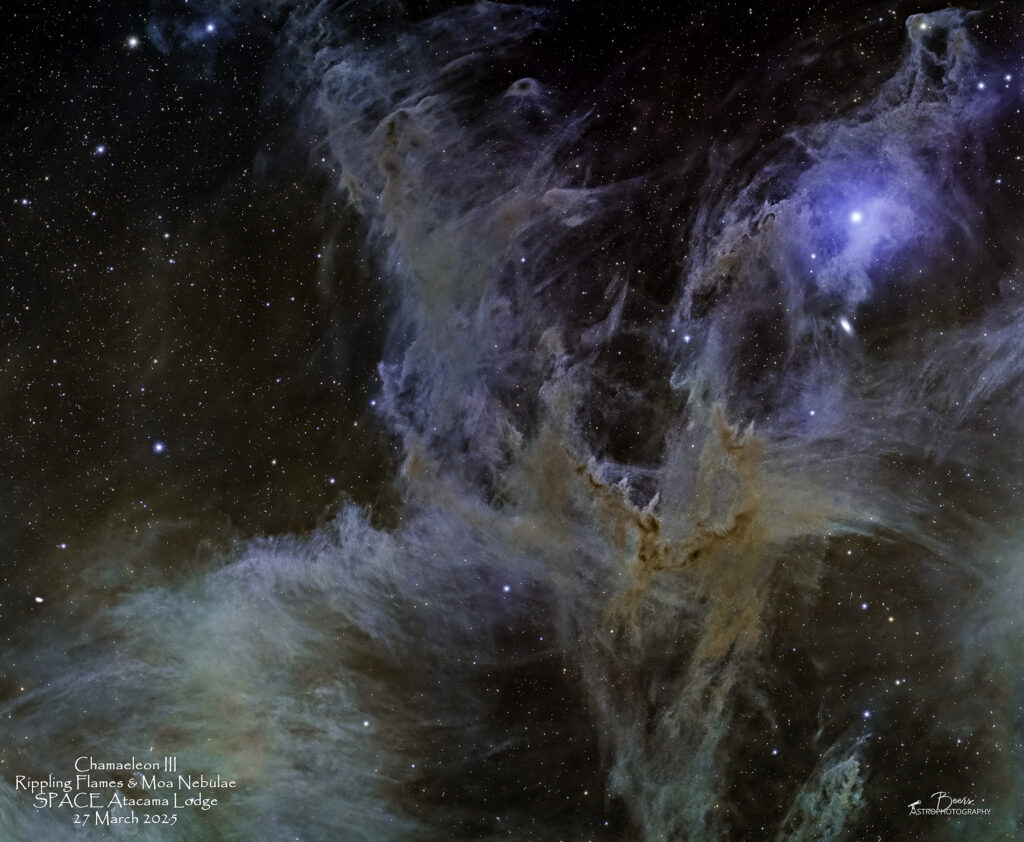
Fun facts Chamaeleon constellation: Chamaeleon is a small constellation in the deep southern sky. It is named after the Chamaeleon, a kind of lizard. It was first defined in the 16th century. STARS: There are four bright stars in Chamaeleon that form a compact diamond-shape approximately 10 degrees from the south celestial pole and about […]
IC1805 Heart Nebula
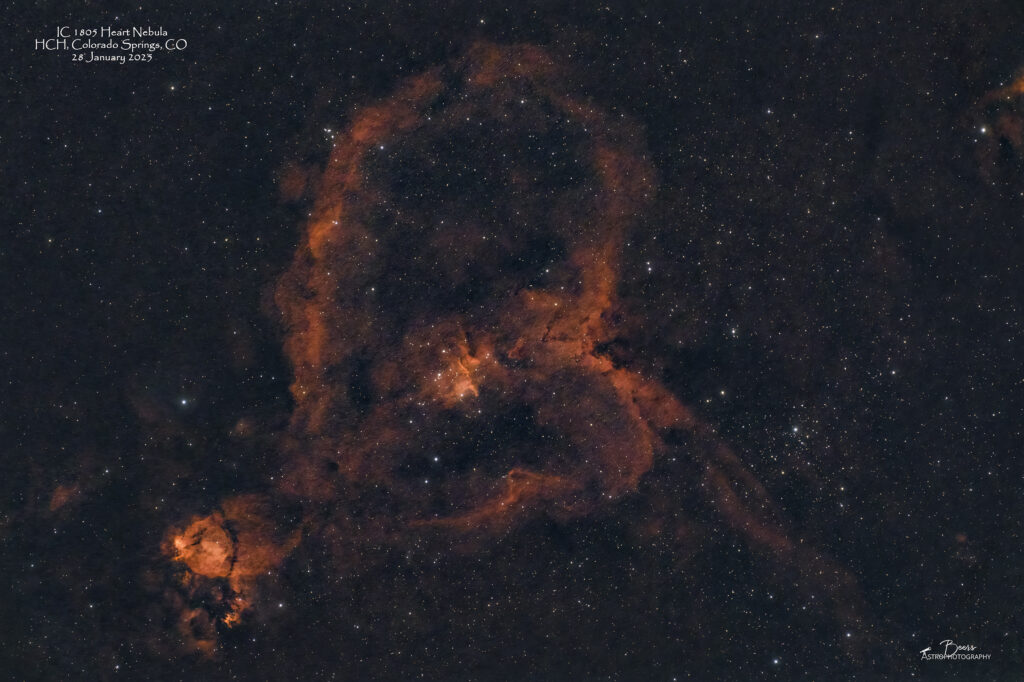
Fun facts IC1805 Heart Nebula (also known as the Running dog nebula) is an emission nebula, 7500 light years away from Earth and located in the Perseus Arm of the Galaxy in the constellation Cassiopeia. It was discovered by William Herschel on 3 November 1787. It displays glowing ionized hydrogen gas and darker dust lanes. […]
IC2177 Seagull Nebula
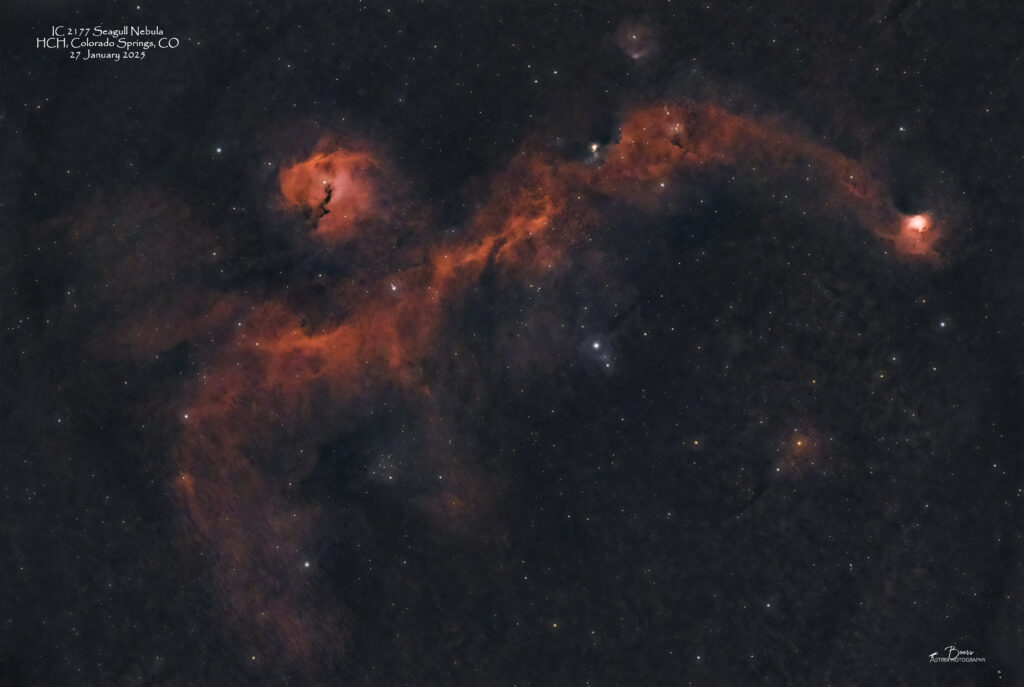
Fun facts IC 2177 is a region of nebulosity that lies along the border between the constellations Monoceros and Canis Major. It is a roughly circular HII region centered on the Be star HD 53367. This nebula was discovered by Welsh amateur astronomer Isaac Roberts and was described by him as “pretty bright, extremely large, […]
SH2-261 Lower’s Nebula
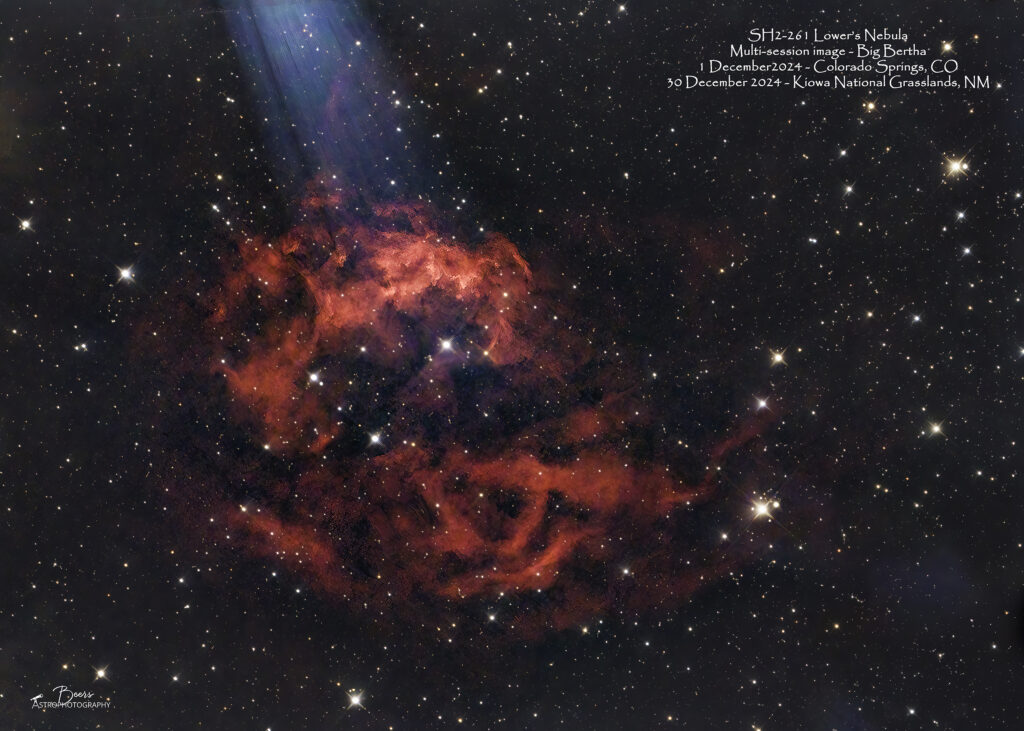
Fun facts Lower’s nebula (LBN 863, Sh2-261 or Sharpless 261) is found in the constellation Orion. Sh2-261 is a large faint region of predominantly ionized hydrogen. The nebula is named after Harold and Charles Lower who discovered this nebula in 1939. Apparent Dimensions: 42’ x 30’Constellation: OrionDesignations: SH2-261, LBN863 {From: https://skyandtelescope.org/online-gallery/lowers-nebula-in-orion-sh2-261/ and Stellarium} Capture Notes […]
M78 Casper the Friendly Ghost Nebula
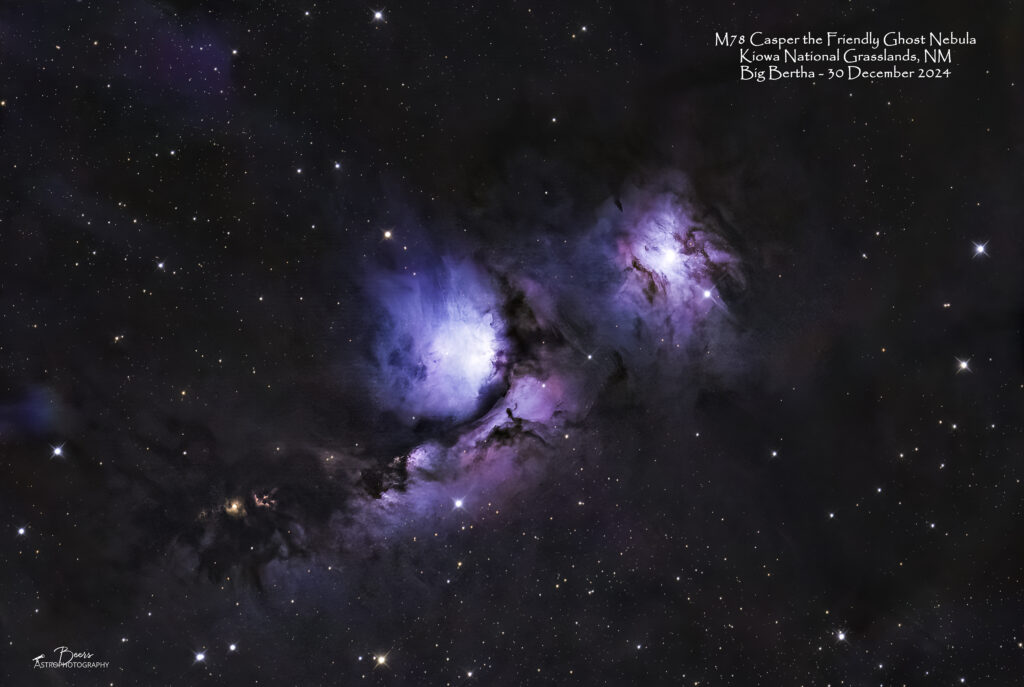
Fun facts Messier 78 or NGC 2068, also known as Casper the Friendly Ghost, is a bright blue reflection nebula in Orion. The nebula can be found between Betelgeuse and closer towards Alnitak. Messier 78 is the brightest reflection nebula among a group of nebulae, including NGC 2064, NGC 2067, and NGC 2071. These are […]
IC405 Flaming Star Nebula
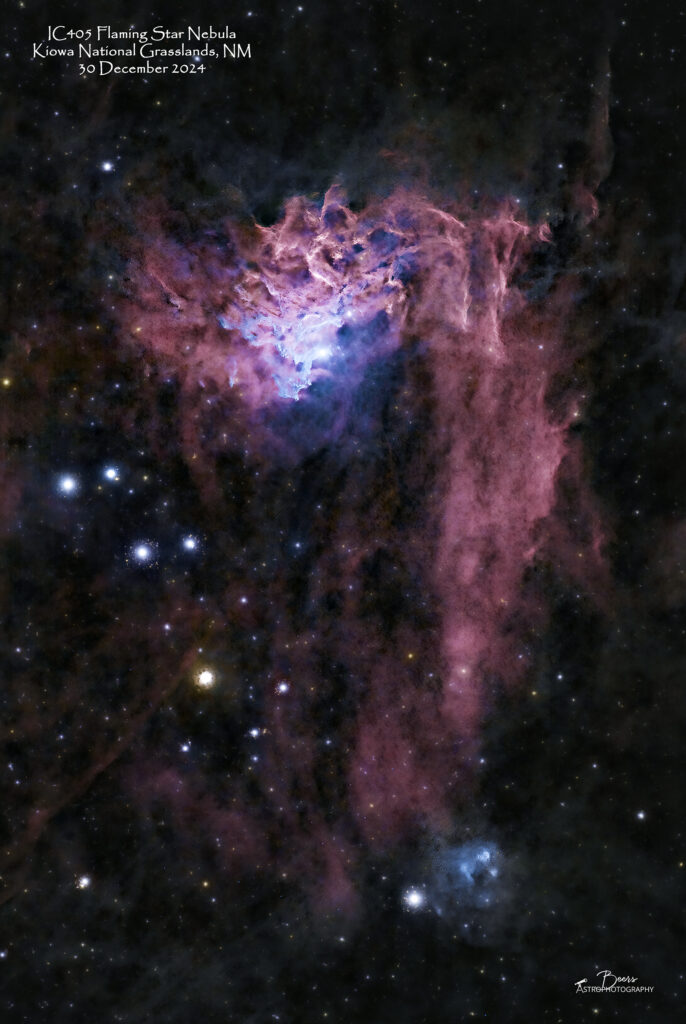
Target Fun Facts IC 405 (also known as the Flaming Star Nebula, SH 2-229, or Caldwell 31) is an emission and reflection nebula in the constellation Auriga north of the celestial equator, surrounding the bluish, irregular variable star AE Aurigae. It shines at magnitude +6.0. It is located near the emission nebula IC 410 (Tadpole […]
Merry Christmas 2024
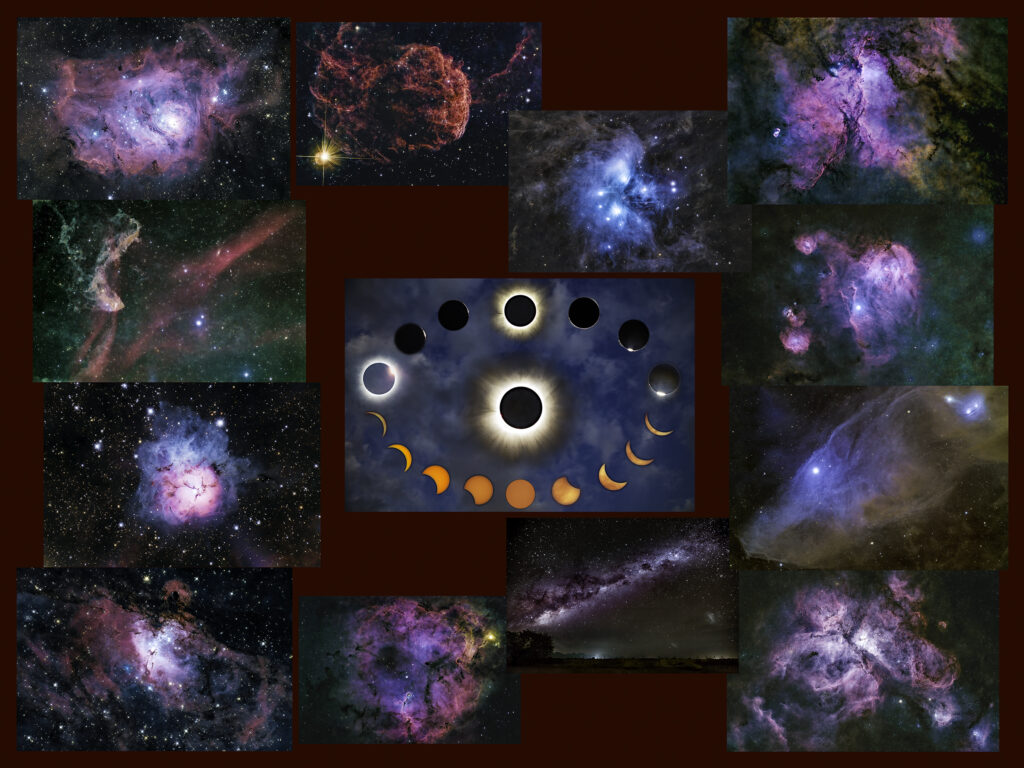
Merry Christmas 2024 & Happy New Year 2025 from Beers Astrophotography! We hope that you have a fabulous year and are prepping for an even more spectacular 2025! Our year went by way too fast – filled with flying, astrophotography, beekeeping, a prolific grape harvest, and fun friend times. My astrophotography year was incredible – […]
IC410 The Tadpoles Nebula
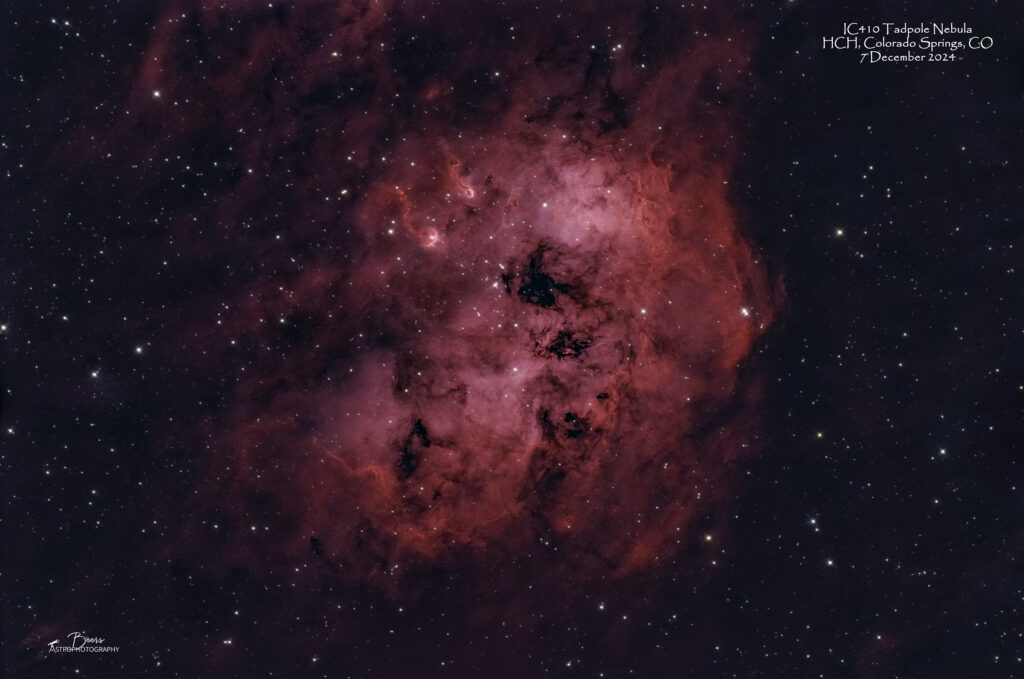
Target fun facts The nebula known as IC 410 is home to a pair of intriguing structures popularly known as the “tadpoles.” These tadpoles, which consist of denser, cooler gas and dust, are approximately 10 light-years long and potentially sites of ongoing star formation. The tails of the tadpoles are caused by the radiation pressure […]
NGC1491 Fossil Footprint Nebula
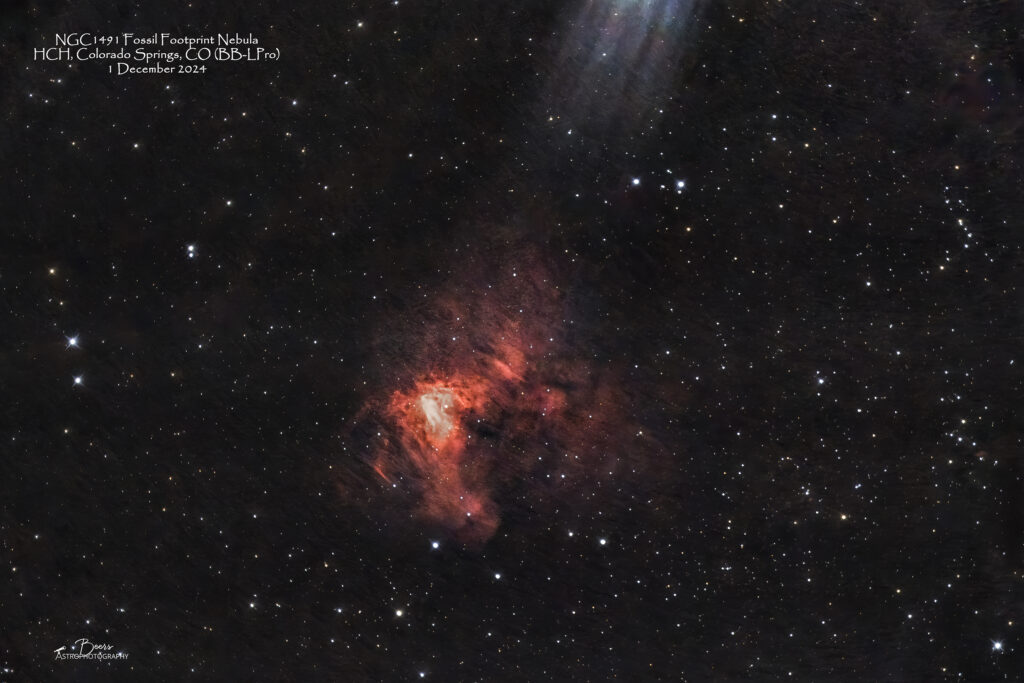
Fun facts NGC 1491, also known as LBN 704, SH2-206 or the Fossil Footprint Nebula, is an emission type bright nebula located about 9,800 light years away from Earth in the constellation of Perseus. The nebula gets its deep red coloration due to many massive stars (such as BD+50 866) embedded within NGC 1491 producing […]
IC443 Jellyfish Nebula
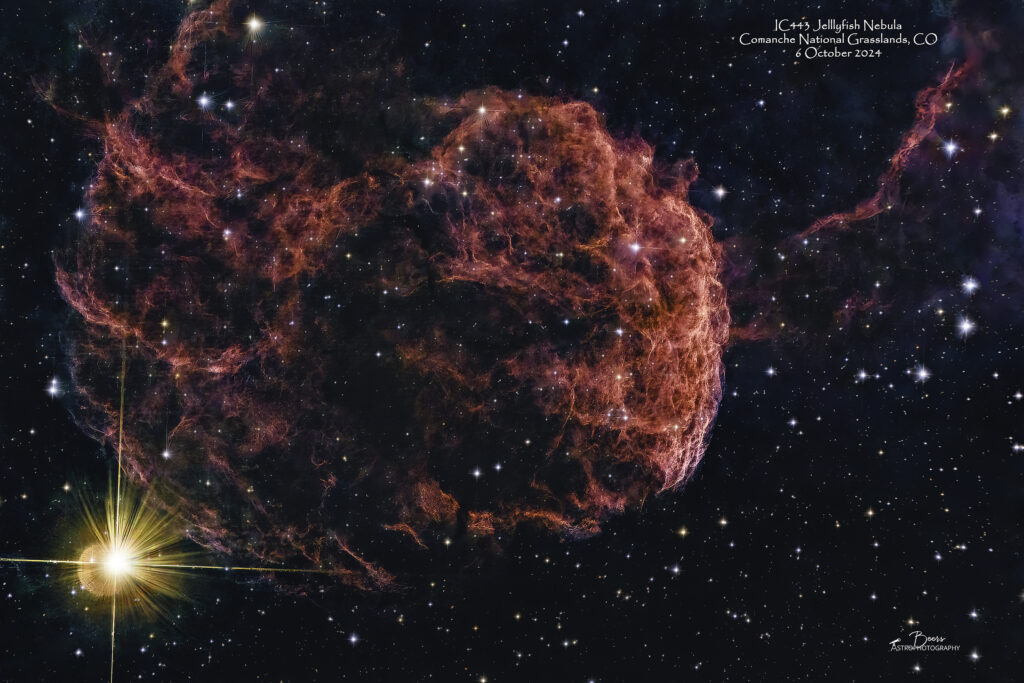
Target Fun Facts IC 443 (also known as the Jellyfish Nebula and Sharpless 248 (Sh2-248)) is a galactic supernova remnant (SNR) in the constellation Gemini. On the plane of the sky, it is located near the star Eta Geminorum. Its distance is roughly 5,000 light years from Earth. IC 443 may be the remains of […]